Publicações

New records of melanistic Tamandua tetradactyla (Pilosa, Myrmecophagidae) from eastern Brazilian Amazonia
Autores: Afonso Santiago de Oliveira Meneses, Mariana de Carvalho, André Teles Corrêa Nascimento, Reuber A. Brandão.
Data de publicação: 17 de Fevereiro de 2026
Resumo:
Melanism is one of the most common chromatic disorders in mammals. The Southern Tamandua
(Tamandua tetradactyla) is a widely distributed species in South America with several
chromatic
patterns, including melanistic forms. Herein, we report two new records of melanistic
individuals
in Brazil, as well as a new record for the state of Pará. The first record (Pará state) was
of
a melanistic individual sleeping in the canopies, and the second record (Amapá state) was of
a female individual carrying a cub that was also melanistic. Although rare, this may be a
fixed
polymorphism in some populations of the T. tetradactyla, a theory supported by our record,
the
first one of a melanistic cub in nature. Since melanism in T. tetradactyla was only recorded
in
a few endemism areas in Amazonia, it is possible that unique biogeographic events in the
biome
may be driving diversification and coat coloration polymorphism in T. tetradactyla.
Visualizar
Entrar em contato com pesquisador(a)

Hydrological impacts of deforestation on flow dynamics of small watersheds in the Brazilian Cerrado – Amazon transition region
Autores: Hellen Kezia Almada, Divino Vicente Silvério, Christopher Neill, Eddie Lenza de Oliveira, Leonardo Maracahipes Santos, Marcia Nunes Macedo.
Data de publicação: 5 de Fevereiro de 2026
Resumo:
Understanding the effects of land use changes on hydrological cycling is essential for
managing water resources. While deforestation is a known driver of hydrological regime
shifts, few studies have assessed its impacts in the steep landscapes of the Brazilian
Amazon-Cerrado transition, a region experiencing rapid deforestation and agricultural
expansion. Here, we evaluate streamflow responses to land use and land cover changes using
three years of field monitoring across eight watersheds (2.5 – 39 km2) in eastern Mato
Grosso, Brazil. Our study watersheds spanned a gradient of slopes (2% – 8.6%) and native
vegetation cover (10% – 80%). Annual and daily flows were consistently higher in deforested
watersheds, and these areas also exhibited greater flow seasonality and stormflow peaks.
Notably, deforested watersheds experienced reduced baseflow during the dry season,
increasing water scarcity at a critical period of the year. These findings highlight the
importance of considering terrain slope and seasonal dynamics, as analyses at annual scales
may mask the dual impacts of deforestation – increased flood risk during the rainy season
and exacerbated water scarcity during the dry season. Integrating slope, land cover, and
multiyear data is therefore essential to support more effective water resource management in
rapidly changing tropical landscapes.
Visualizar
Entrar em contato com pesquisador(a)
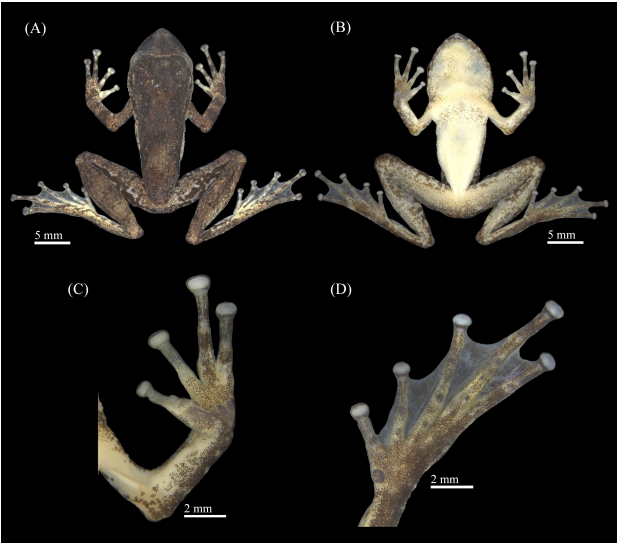
A new species of the Ololygon catharinae group from the Brazilian Cerrado
Autores: Daniele Carvalho, Alejandro Valencia-Zuleta, Katyuscia Araujo-Vieira, Julián Faivovich, Natan M. Maciel, Reuber A. Brandão.
Data de publicação: 04 de Fevereiro de 2026
Resumo:
We describe a new species of the Ololygon catharinae group from the Cerrado biome, in the
state of Minas Gerais, Brazil.
Ololygon paracatu sp. nov. is morphologically similar to O. goya and O. skaios, although in
phylogenetic analyses, it is
recovered as the poorly supported sister taxon of O. pombali. It is distinguished from other
species of the O. catharinae
group by having a canthus rostralis marked and curved; subovoid snout in dorsal view and
protruding in profile; inverted
triangle shaped interocular blotch, exceeding the posterior margin of the eyes; inguinal
region and hidden areas of thighs
with dark brown irregular blotches on a pale yellow background in life; and advertisement
call composed of 3–5 pulsed
notes and dominant frequency of 2.5–3.5 kHz. Ololygon paracatu sp. nov. inhabits gallery
forests associated with streams
in the Cerrado biome.
Visualizar
Entrar em contato com pesquisador(a)

The Role of Gene Flow in the Diversification of the Monkey Treefrog Complex Across the South American Dry Diagonal
Autores: Felipe Camurugi, Vinícius A. São Pedro, Felipe Magalhães, Marcelo Gehara, Eliana F. Oliveira, Gabriel C. Costa, Frank T. Burbrink, Edward A. Myers, Guarino R. Colli, Miguel T. Rodrigues, Adrian A. Garda.
Data de publicação: 04 de Fevereiro de 2026
Resumo:
Understanding Neotropical megadiversity remains challenging due to fundamental taxonomic
issues, including identifying and describing cryptic species and their distribution, and the
limited knowledge of key factors driving biological diversification. Such challenges are
especially prominent in diverse clades with high levels of cryptic species, such as many
Neotropical frogs. Herein, we conduct a mitochondrial phylogenetic study on monkey treefrogs
in the genus Pithecopus and a multilocus analysis of the P. hypochondrialis species group
throughout its distribution in the South American dry diagonal (DD). Our goals were to infer
the main lineages and identify historical factors that led to their divergence. Among nine
currently recognised species, we found 14 well-structured mitochondrial lineages in two main
clades, which diversified during the Paleogene/Neogene transition. The lowland clade is
widely distributed in the DD, and our multilocus analysis suggests it comprises seven
geographically structured lineages: P. azureus, two lineages of P. hypochondrialis, two
species and one lineage for the P. nordestinus complex, and Pithecopus sp. Considering the
geomorphological history of the region, diversification may have been promoted by allopatric
speciation during Miocene paleogeographic events, especially the Brazilian Plateau
compartmentalization and fluctuations in the São Francisco River water volume. Furthermore,
gene flow between some lineages may be explained by niche conservatism and demographic
expansions during the late Pleistocene, a period marked by climatic fluctuations and biome
shifts. Our results reinforce the importance of both Neogene tectonic activity and
Quaternary climatic fluctuations in shaping the Neotropical biota.
Visualizar
Entrar em contato com pesquisador(a)

Demography Meets Climate Change: Life History Challenges for a Neotropical Viviparous Lizard
Autores: Fabio de Oliveira Roque, Charlotte Ndiribe, Gerhard E. Overbeck, José Henrique F. Mello, Mariana G. Bender, Helena G. Bergallo, Ronaldo Christofoletti, Guarino R. Colli, Adrian A. Garda, Hernani F.M. Oliveira, et al.
Data de publicação: 19 de Janeiro de 2026
Resumo:
Biomes are fundamental units for biodiversity conservation given their large geographical
coverage and peculiarities. The interconnectivity among biomes maintains biodiversity and
climate patterns at larger spatial and temporal scales. Therefore, treating biomes as
isolated entities can undermine the effectiveness of environmental policies and governance
towards sustainability goals. In Brazil, for instance, such fractional perspectives could
create fragmented or limited understanding of important socio-ecological interconnections
among biomes, ultimately constraining effective conservation strategies and policies. Yet
much has been done to integrate Brazilian biomes in scientific research or conservation
projects, here we portray how the adoption of an integrated view that considers the
synergies and interdependencies among biomes is critical for promoting effective
conservation. This is important to ensure the persistence of significant ecological benefits
derived from the natural resources of these biomes.
Visualizar
Entrar em contato com pesquisador(a)

Demography Meets Climate Change: Life History Challenges for a Neotropical Viviparous Lizard
Autores: Maria Luiza Gonçalves Santos, Heitor Campos de Sousa, Laís Pio Caetano Machado, Guarino R. Colli.
Data de publicação: 28 de Dezembro de 2025
Resumo:
Considering the current biodiversity crisis, it is crucial to understand the impact of
global environmental changes on natural populations. Analyzing demographic parameters from
long-term studies is the most effective approach to uncovering patterns that describe
population dynamics. These patterns can then be linked to the environmental factors driving
these dynamics, providing an accurate understanding of how environmental changes affect
natural populations. This study aims to build a demographic distribution model of Notomabuya
frenata, a Neotropical viviparous lizard, to investigate its potential responses to
environmental changes. Using mark-recapture data collected over more than 15 years, we built
Integral Projection Models (IPMs) to project population trajectories across time and space
based on relationships among vital rates, body size, and environmental covariates. Our work
indicates that this species is positioned in the middle of the “slow-fast” life-history
continuum of lizards, with early maturity and intermediate survivorship. We also demonstrate
that it is already experiencing impacts from rising global mean temperatures, which
compromise individuals' survival and ultimately reduce population growth, particularly at
the northwestern periphery of its distribution. The spatially explicit approach we applied
enables an understanding of the demographic consequences of climate-induced environmental
variability across different locations, recognizing that the projected impacts of climate
change are unevenly distributed.
Visualizar
Entrar em contato com pesquisador(a)

Optimizing restoration outcomes in the Brazilian Cerrado: A spatial planning framework integrating endemic lizard biodiversity, connectivity, and costs
Autores: Ticiane L. Costa, Ana Caroline Cardoso Aragão, Guarino R. Colli.
Data de publicação: 24 de Dezembro de 2025
Resumo:
Given the extensive loss and fragmentation of natural areas in the Brazilian Cerrado,
ecological restoration of degraded lands is essential to halt biodiversity decline in this
globally significant hotspot. Ambitious restoration targets, limited financial resources,
and data-limited contexts demand strategies that address these challenges while ensuring
cost-effectiveness. We developed an innovative spatial prioritization framework using the
prioritizr package in R to identify priority areas for restoration in the Cerrado,
integrating endemic lizard biodiversity, functional connectivity, and restoration costs. For
species with few occurrence records, we built Species Distribution Models (SDMs) based on
phylogenetic inference, applying the ENphylo method recently proposed in the literature,
while conventional SDMs were used for species with sufficient records. By combining total
species richness and the richness of threatened species as proxies for biodiversity value,
we accounted for both conservation urgency and representativeness. Functional connectivity
was assessed by quantifying the contribution of each restorable area to landscape
connectivity, whereas restoration cost was estimated using natural regeneration potential as
a proxy. The optimization produced an efficient and replicable solution that identified four
focal regions for restoration—central, southeastern, western, and northern Cerrado—balancing
ecological value with implementation feasibility. These results highlight the need for
strategic restoration in regions under heavy agricultural pressure and habitat
fragmentation. Our approach advances restoration planning in data-limited contexts by
integrating cutting-edge biodiversity modeling and optimization tools, offering a robust
framework to inform national and global restoration policies and biodiversity planning
efforts across tropical ecosystems facing similar conservation and socio-economic
challenges.
Visualizar
Entrar em contato com pesquisador(a)
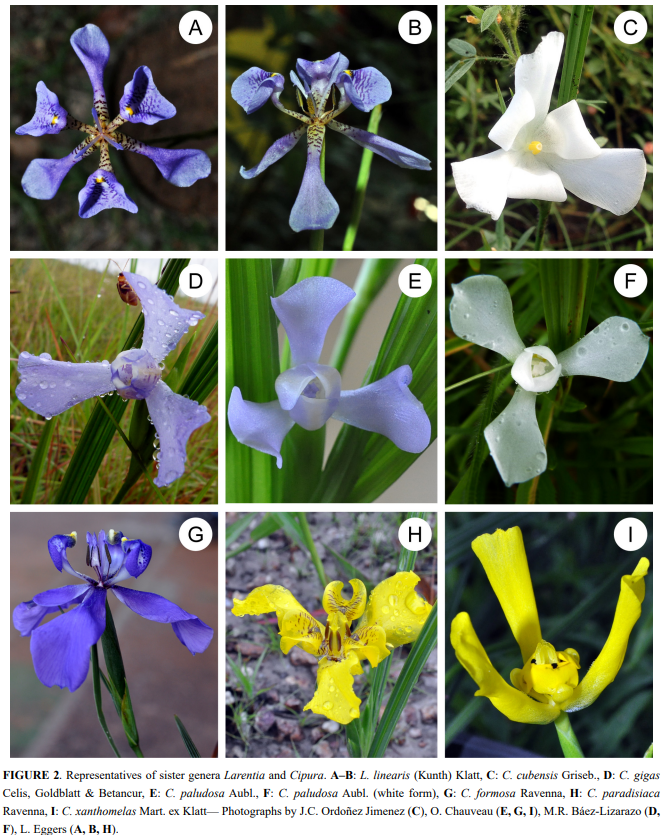
Molecular phylogenetics and morphological diversity in Cipura (Iridoideae, Iridaceae): species delimitation and taxonomic revision of the genus, with the description of two new species
Autores: Olivier Chauveau, Mabel R. Báez-Lizarazo, Antonio J.C. Aguiar, Eudes M. Stiehlalves, Tatiana T. Souza-Chies, Lilian Eggers.
Data de publicação: 19 de Dezembro de 2025
Resumo:
Two new species of Cipura are described from the Cerrado Biome (Brazil): Cipura kalunga,
from the northern mesoregion of
Goiás state, and C. mestrensis, previously confused with C. formosa, and found in the states
of Bahia, Goiás, and Tocantins.
A comprehensive review of herbarium specimens combined with fieldwork enabled molecular and
morphological analyses
to elucidate the phylogenetic relationships within Cipura and assess the taxonomic status of
the two new species. The new
taxonomic entities are described, illustrated, compared with morphologically related species
and an amended description
of C. formosa is proposed. Distribution maps and phenological data are also provided.
Taxonomical and nomenclatural
notes, typifications, conservation assessments and an identification key for the different
species of Cipura are included.
Phylogenetic analyses revealed two major lineages, distinguished by the morphology of the
inner tepals, and 12 distinct taxa
are recognized within the genus, of which three are only known from morphology.
Visualizar
Entrar em contato com pesquisador(a)

The CARDUME initiative: integrating Brazil’s scientific fish collections to promote research and biodiversity conservation
Autores: José L O Birindelli, Francisco Severo-Neto, Cristiano R Moreira, Lucas F Colares, Lucas P Oliveira, Luciano F A Montag, Veronica Slobodian, et al.
Data de publicação: 04 de Novembro de 2025
Resumo: Brazil hosts the highest fish diversity globally, underscoring the critical role of Brazilian Scientific Fish Collections (BSFCs) in biodiversity research and conservation. Despite their importance, BSFCs face persistent challenges. This study introduces the CARDUME network, the first nationwide initiative to assess BSFCs and propose strategies to enhance their role in ichthyology. Data from 74 collections across 25 Brazilian federal units reveal that most are affiliated with public universities and house 8 502 992 catalogued specimens in 906 890 lots, including over 2600 primary types. Although digitization efforts are underway in 92% of BSFCs, only 37% currently share data online. Genetic resources are severely limited, with tissue samples available for just 3% of specimens. Significant funding disparities exist, with 70% of collections receiving less than USD170 annually. Gender inequality is also notable, with more male-curated than female-curated collections. Survey responses highlighted issues such as staff shortages, inadequate facilities, and limited resources for fieldwork and collection curation. CARDUME aims to address these gaps through collaboration, professional training, improvement of data quality, and increase of shared data, while also advocating for recognition by Brazilian institutions, funding agencies, and the government. O resumo em português está disponível no material suplementar.
Visualizar Entrar em contato com pesquisador(a)
Integrating biodiversity into climate policy: From ecosystem services to food security in Brazil
Autores: Carlos Eduardo V. Grelle, Cecília R. Vieira, Guarino R. Colli, Wiliam E. Magnusson, Adrian A. Garda, Gerhard Overbeck, Helena G. Bergallo, Alberto Akama, Leandro Juen, et al.
Data de publicação: 28 de Outubro de 2025
Resumo: Biodiversity and food security are often perceived as conflicting objectives, yet they are deeply interdependent through ecological processes. Biodiversity regulates soil quality, water, climate dynamics and ecological processes—such as pollination—thereby influencing food security, economic development, and resilience to climate risks. In Brazil, the conservation of ecosystems and pollination services exemplify how biodiversity underpins key agricultural commodities such as soy and coffee. Aligning biodiversity conservation with climate policy is therefore crucial, particularly in megadiverse countries that are major commodity producers. With COP30 taking place in Brazil, there is a unique opportunity to integrate biodiversity into global climate agendas, strengthen governance and legislation, and attract investment through sustainable frameworks. This perspective emphasizes that protecting biodiversity is not only an environmental priority but also a strategic pathway for food security, climate resilience, and sustainable economic development.
Visualizar Entrar em contato com pesquisador(a)
Effects of different prescribed burning seasons on Hancornia speciosa Gomes trees
Autores: Rodrigo de Moraes Falleiro, Lívia Carvalho Moura, Marcelo Trindade Santana, Luciano Carregosa dos Santos, Maristella Aparecida Corrêa, Jorge Itai Marinho Marizê Souza Guajajara, Isabel Belloni Schmidt.
Data de publicação: 28 de Outubro de 2025
Resumo: A Hancornia speciosa Gomes (Apocynaceae), conhecida como mangabeira, é uma árvore comum nas savanas centro-sul-americanas. A espécie é importante, especialmente por seus frutos, que são consumidos pelos animais nativos e comunidades locais, impulsionando uma cadeia econômica significativa. No Brasil, H. speciosa ocorre em abundância no bioma Cerrado, onde as áreas protegidas foram submetidas a mudanças de gestão. A implementação do manejo integrado do fogo alterou os regimes de fogo predominantes, da exclusão do fogo intercalada por grandes incêndios para o manejo com queimas prescritas. Nas Terras Indígenas, as recomendações técnicas são baseadas no conhecimento tradicional e cobrem uma ampla janela de fogo, que vai do final da estação chuvosa até a metade da estação seca. O objetivo deste trabalho foi avaliar os efeitos de diferentes épocas de queima prescrita na H. speciosa. A metodologia envolveu coleta de dados por brigadistas locais e análise estatística usando o Teste de Tukey (p < 0,05). Em todas as épocas avaliadas, as taxas de mortalidade foram baixas. As queimas prescritas durante o final da estação chuvosa foram mais severas. As queimas prescritas durante o início da estação seca apresentaram menor severidade e as maiores taxas de reprodução e de produção de frutos. As queimas prescritas no meio da estação seca apresentaram as maiores perdas de estruturas reprodutivas. Esses resultados indicam que as queimas prescritas no início da estação seca podem ser mais apropriadas para a H. speciosa. No entanto, considerando a variabilidade das respostas e os resultados relativamente positivos em todos os tratamentos, concluímos que as queimas prescritas podem ser realizadas durante todas as épocas avaliadas, proporcionando uma ampla janela de fogo que facilita o manejo em larga e beneficia a diversidade de espécies.
Visualizar Entrar em contato com pesquisador(a)
Shortcuts to degradation: environmental consequences of Brazil’s general environmental licensing law
Autores: Geraldo Willson Fernandes, Gabriel Arvelino de Paula, Helena de Godoy Bergallo, Ronaldo Christofoletti, Guarino Rinaldi Colli, et al.
Data de publicação: 27 de Outubro de 2025
Resumo: Brazil’s General Environmental Licensing Law (No. 15,190/2025) redefines environmental governance under the banner of “simplification” but effectively dismantles preventive safeguards. The law introduces self-declared licensing, automatic license renewals, and broad exemptions for agriculture and livestock, while restricting public participation. Although partial presidential vetoes removed some unconstitutional provisions, these vetoes may still be overturned by Congress. Key omissions, such as the absence of vetoes on Articles 7 and 9, preserve mechanisms that weaken oversight and accountability. Within Brazil’s decentralized system, where most authorizations are issued by state agencies, the law consolidates existing permissive practices and deepens regulatory asymmetry. This new framework lowers the national baseline for environmental protection, threatens biodiversity, and jeopardizes Brazil’s ability to meet international climate and biodiversity commitments. Instead of modernizing procedures or strengthening institutional capacity, the law normalizes shortcuts that externalize environmental costs and undermine democratic participation.
Visualizar Entrar em contato com pesquisador(a)
Precipitation and Temperature-Dependent Locomotor Performance Drive the Abundance of a Neotropical Lizard
Autores: Raquel da Silva Acácio, Heitor Campos de Sousa, Thiago Costa Gonçalves Portelinha, Guarino Rinaldi Colli, Adriana Malvasio.
Data de publicação: 24 de Outubro de 2025
Resumo: Compreender os fatores que influenciam a dinâmica de populações naturais é essencial para mitigar os impactos das mudançasantropogênicas. Neste estudo, investigamos os efeitos do clima, microclima e ecofisiologia na demografia de Tropidurus oread-icus, um lagarto endêmico das savanas do Cerrado brasileiro. Em um gradiente de vegetação, monitoramos os lagartos mensal-mente durante quatro anos usando um protocolo de marcação e recaptura com armadilhas de interceptação e queda (pitfall). Realizamos experimentos ecofisiológicos com 20 indivíduos e usamos temperaturas microclimáticas para estimar as horas deatividade e o desempenho locomotor para cada armadilha e mês. Ao longo deste período, realizamos 598 capturas e recapturasde 372 indivíduos. As variáveis ambientais não explicaram os determinantes do crescimento populacional, como a sobrevivên-cia e o recrutamento. Em vez disso, esses parâmetros demográficos parecem flutuar devido à variação sazonal da estrutura detamanho da população a cada ano e às relações de densidade- dependência negativa. Identificamos uma forte correlação entre orecrutamento e os meses chuvosos, com picos ocorrendo em dezembro e janeiro. A precipitação e o desempenho locomotor forambons preditores da probabilidade de captura e da abundância de T. oreadicus. Capturamos mais lagartos nos meses mais secos,enquanto a abundância aumentou na estação chuvosa, quando o desempenho locomotor foi mais alto. Assim, nossos resultadossugerem que a disponibilidade sazonal de microhabitats que otimizam o desempenho locomotor é uma pressão seletiva chaveque moldou o período reprodutivo de T. oreadicus, um mecanismo provavelmente crucial para outros ectotérmicos. Mudançasestocásticas e antropogênicas na precipitação e nas temperaturas microclimáticas podem prejudicar a abundância de T. oreadi-cus, ameaçando a persistência da população local.
Visualizar Entrar em contato com pesquisador(a)
Mapping Resilient Landscapes to Climate Change in a Megadiverse Country
Autores: Adrian Antonio Garda, Manuel Eduardo Ferreira, Renata Libonati , Rita de Cássia Quitete Portela, & et al.
Data de publicação: 07 de Setembro de 2025
Resumo: The effects of global climate change on biodiversity and ecosystem functioning are unevenly distributed in the geographic space. Identifying sites more suitable to sustain biodiversity in a changing climate is essential to both species conservation and restoration strategies at different scales. Here, we map terrestrial climate-resilient sites for biodiversity across Brazil to identify sites with greater chances of providing suitable conditions for species to persist under regional climate change. Our mapping combines spatial metrics based on landscape heterogeneity, a proxy for microclimatic variability, and local connectedness, a measure of connectivity between habitats, to determine landscape resilience, assuming that resilience to climate change will be greater the more heterogeneous the characteristics of local habitats are and the more connected they are in the landscape. Our results show that within each biome, medium to high resilient sites are mostly found in the Amazon (40% of the biome) and Pantanal (38%). Low resilience, conversely, is concentrated in the Atlantic Forest (41% of the biome), followed by Cerrado (37%), Pampa (36%), and Caatinga (34%). Landscape resilience information has the potential to be used to effectively guide decision-making and public policy on strategies for conserva- tion, restoration, and sustainable use practices. Priority for conservation should be on high resilience sites as they have the potential to sustain biodiversity in face of undergoing and future climate change. Other approaches could be used in situations of medium to low resilience also, such as: conservation of current corridors in sites with high local connectedness, but low landscape heterogeneity; 2 of 17 Global Change Biology, 2025 restoration of natural vegetation on sites that show high landscape heterogeneity, but low local connectedness; and sustainable prac- tices in areas of low resilience. Our study provides an updated method to pinpoint climate-resilient sites for biodiversity which was applied to a megadiverse country but is applicable to any ecosystem around the globe.
Visualizar Entrar em contato com pesquisador(a)
Cartilha Sobre Incêndios Florestais E Manejo Integrado Do Fogo (Mif)
Autores: Cristiane Parente, Ramilla Yamanaka, Isabel Schmidt.
Data de publicação: 21 de Agosto de 2025
Resumo: A imprensa, por sua vez, com seu papel fundamental de informar — e também de educar e agendar o debate na sociedade —, deve compreender que, em tempos de negacionismo e racismo ambiental, desinformação e às vésperas da COP30 — quando tantos interesses econômicos e políticos disputam atenção —, tem o dever, cada vez maior, de pautar-se pela integridade da informação e pelo interesse público. Isso inclui divulgação correta e precisa de informações; cobrança pela responsabilização de órgãos e empresas públicas e/ou privadas que provoquem danos ambientais; pautas bem apuradas, contextualizadas e a escuta de fontes qualificadas, respeitando-se sempre a diversidade e a pluralidade dos territórios brasileiros. Que esta nossa cartilha possa contribuir para qualificar, cada vez mais, a cobertura sobre o fogo no Brasil — especialmente sobre o fogo natural, o Manejo Integrado do Fogo (MIF) e os incêndios florestais —.
Visualizar Entrar em contato com pesquisador(a)
The climatic patterns that control regional fire activity in the Brazilian savanna
Autores: Patrícia S. Silva, Renata Libonati, Luiz G. Gonçalves, & Carlos C. DaCamara
Data de publicação: 21 de Agosto de 2025
Resumo: Fire activity in the Brazilian savanna (Cerrado) is heavily constrained by climate, however the climate patterns that lead to extreme fire seasons are not yet well understood. Climate conditions during the fire season determine fire weather, but climate patterns prior to the fire season months may also modulate fuel availability and condition. In the context of a changing climate, understanding the climatic patterns that lead to extreme fire events, and their mediating factors, is crucial to build resilient landscapes and inform decision-making. In this study, we propose to uncover the nature of these relationships for Cerrado. We evaluate the regional temperature and precipitation patterns that lead to severe and mild fire seasons for each of the 19 ecoregions of Cerrado. We identify two periods that show contrasting behaviours in both extremes: the concurrent climate conditions during the fire season months (August to October) and pre-conditions during the austral autumn (March to May). Despite noteworthy regional discrepancies, in general we find that severe fire seasons are preceded by hot and dry conditions during autumn and associated with hot and dry conditions during the fire season months. Mild fire seasons see the opposite pattern, with colder and wetter conditions both during and prior to the fire season. We further investigate the influence of these climatic patterns in extreme fire activity for each month of the fire season and find that, over most ecoregions, early fire season burned areas are influenced by pre-conditions during autumn, whereas late fire season burned areas rely on concurrent favourable meteorological conditions. These results contribute to the understanding of the regional fire-climate dynamics of the second largest biome in South America and provide a starting point for regional fire outlooks. We further provide regionally tailored information that, considering recent Brazilian policies, may prove useful for fire management.
Visualizar Entrar em contato com pesquisador(a)
Aplicação do protocolo avançado do Programa Monitora no monitoramento de plantas lenhosas em unidades de conservação do Cerrado
Autores: Matheus S. Martins, Washington L. Oliveira, Bruno M. T. Walter, Luciano B. Bianchetti, Marcelo L. Reis, Raffaella G. N. Fonseca & Marcelo F. Simon
Data de publicação: 11 de Agosto de 2025
Resumo: O bioma Cerrado é composto por um mosaico de vegetações influenciadas por diferentes condições ambientais e históricas. Aqui apresentamos os resultados de até nove anos de monitoramento das plantas lenhosas em cinco unidades de conservação (UCs): Estação Ecológica Serra Geral do Tocantins/BA-TO, Parque Nacional de Brasília/DF, Parque Nacional da Chapada dos Veadeiros/GO, Parque Nacional da Serra da Bodoquena/MS e Parque Nacional da Serra do Cipó/MG. Seguindo o protocolo do Programa Monitora, inventariamos sete unidades amostrais (quatro savanas e três florestas) em 2014, 2018 e 2023. Analisamos a similaridade florística entre áreas, bem como a dinâmica das vegetações e estimativas de biomassa. Houve baixa similaridade entre unidades amostrais localizadas em diferentes UCs, o que reflete a complexa heterogeneidade fisionômica e biogeográfica do Cerrado. As savanas apresentaram riqueza entre 41 e 59 espécies, diversidade entre 9,5 e 12,9 (alfa-Fisher) e biomassa entre 13,4 e 29,9 Mg/ha. Dentre as florestas, o Parque da Bodoquena (mata seca) apresentou os maiores valores de riqueza (61), diversidade (19,2) e biomassa (145,4), enquanto no Parque da Serra do Cipó (cerradão) a riqueza (27), diversidade (10,5) e biomassa (43,7) foram inferiores. Observou-se equilíbrio entre taxas de mortalidade e recrutamento, ou balanço favorável ao recrutamento, e manutenção ou incremento na biomassa. UCs submetidas a mais eventos de fogo apresentaram menores incrementos em número de indivíduos e biomassa. A continuidade e ampliação desse monitoramento auxiliará no desenvolvimento de estratégias para aprimorar o manejo e a avaliação da efetividade dessas UCs na conservação da diversidade vegetal do Cerrado.
Visualizar Entrar em contato com pesquisador(a)Sexual dimorphism and reproductive ecology of the South American rattlesnake Crotalus durissus (Squamata: Viperidae) in the Brazilian Cerrado
Autores: María Adelaida Hoyos A., Selma M. Almeida-Santos, Gabriel C. Costa, Daniel O. Mesquita, Donald B. Shepard & Guarino R. Colli.
Data de publicação: 15 de Julho de 2025
Resumo: The South American rattlesnake (Crotalus durissus) is widely distributed in Brazil, including isolated populations in savannas within Amazonian and Atlantic forests. We investigated the sexual dimorphism and reproductive ecology of C. durissus from the Brazilian Cerrado to address the following questions: (1) What patterns of sexual dimorphism in morphometric characters are present? (2) Do sexes differ in size at sexual maturity? (3) Does reproduction of males and females vary seasonally? (4) Do females reproduce annually, biennially, or at longer intervals? We found sexual dimorphism with males having larger body sizes and longer tails than females, a pattern likely associated with intra-sexual competition between males. Males reach sexual maturity at a slightly smaller size than females (60.7 vs 62.7 cm snout–vent length). In females, vitellogenesis peaks in the late dry season (September), extending into the early rainy season (October–November). The female reproductive cycle suggests a biennial or more extended pattern, as seen in other rattlesnake species. Males show testes with a turgid appearance and convoluted vas deferens year round.
Visualizar Entrar em contato com pesquisador(a)
Fire as an Evolutionary Driver in South America
Autores:Marcelo F. Simon & Vinicius L. Dantas
Data de publicação: 02 de Julho de 2025
Resumo: Regimes ancestrais de incêndios têm desempenhado um papel-chave nos ecossistemas terrestres e sua influência na evolução de adaptações de plantas ao fogo compreende milhões de anos. Classificamos 115 ecorregiões sulamericanas em Piromas (áreas com regimes de incêndio semelhantes) e identificamos as principais adaptações. O Piroma “Raro” inclui florestas tropicais úmidas e desertos, onde incêndios são incomuns e as espécies são sensíveis ao fogo. O Piroma “Intenso” é caracterizado por incêndios infrequentes, de alta intensidade, associados à variabilidade interanual da pluviosidade e atividade antropogênica, ocorrendo em florestas tropicais/temperadas estacionais e vegetações arbustivas semiáridas, onde a regeneração pós-fogo ocorre predominantemente via rebrota basal ou banco de sementes. O Piroma “Frequente” compreende campos e savanas tropicais sujeitos a incêndios regulares e frequentes. Casca espessa/corticosa, rebrota por órgãos subterrâneos ou bancos de gemas aéreos, e floração induzida pelo fogo são adaptações encontradas neste Piroma. As características das plantas evoluíram em resposta a milhões de anos na presença de regimes de fogo. Porém, esses regimes têm sido cada vez mais alterados pelo homem, com consequências negativas para espécies e ecossistemas. Defendemos que o legado dos regimes ancestrais de incêndios sobre a evolução dos ecossistemas sulamericanos seja considerado, a fim de mantê-los biológica e funcionalmente diversos.
Visualizar Entrar em contato com pesquisador(a)
Traditional Fire Uses by Indigenous Peoples and Local Communities in South America
Autores:Bibiana A. Bilbao, Brian G. Ferrero, Rodrigo M. Falleiro, Livia Carvalho Moura & Guilherme M. Fagundes
Data de publicação: 02 de Julho de 2025
Resumo: Os Povos Indígenas e Comunidades Locais tradicionais da América do Sul desenvolveram sistemas complexos de uso do fogo por mais de 10.000 anos, que vão além das necessidades básicas, como aquecimento, cozimento e socialização. Essas práticas evoluíram para técnicas sofisticadas de criação de paisagens pirobioculturais, policultura, domesticação de plantas, obtenção de recursos, enriquecimento do solo, proteção e limpeza das terras, além de propósitos espirituais e estéticos. Com base na literatura científica e trabalho de campo, demonstramos que essas comunidades utilizaram o fogo de maneiras diversas e complexas para obter múltiplos benefícios em savanas e pastagens, até mesmo em florestas tropicais, sensíveis ao fogo. Paradoxalmente, apesar da grande diversidade cultural indígena e das evidências que sustentam a sustentabilidade dessas práticas, as políticas frequentemente as proíbem, promovendo abordagens de “fogo zero”. Essas políticas persistem, apesar de sua eficácia limitada, com resultados controversos na conservação e maiores riscos socioambientais, especialmente em condições de mudança climática e uso da terra. Argumentamos que o desenvolvimento de políticas de manejo do fogo mais holísticas, eficazes e justas exige a inclusão de diversas perspectivas e a revitalização do conhecimento e práticas adaptativas indígenas e locais tradicionais, que têm gerido essas paisagens de forma sustentável por milênios.
Visualizar Entrar em contato com pesquisador(a)
Fire in the Cerrado
Autores:Vânia R. Pivello, Márcio Martins, Alexander V. Christianini, Ana Paula Carmignotto, Bruna França Gomes & Alessandra Fidelis
Data de publicação: 02 de Julho de 2025
Resumo: O Cerrado compreende um complexo de campos e savanas tropicais que dominam a parte central do Brasil, com manchas menores na região Amazônica, Paraguai e Bolívia. Com grande variedade de paisagens e habitats é a savana mais diversificada do mundo, onde plantas e animais evoluíram sob a influência do fogo. Este capítulo descreve várias adaptações da flora e da fauna para lidar com os incêndios frequentes, rápidos e de baixa intensidade, característicos do Cerrado: rebrota rápida e floração intensa após o fogo, gemas protegidas, raízes e órgãos subterrâneos bem desenvolvidos, cascas grossas e isolantes das árvores são exemplos para as plantas; muitos animais se refugiam em tocas e se beneficiam de maiores recursos após as queimadas. O fogo ainda desempenha um papel crucial na ciclagem de nutrientes e na regeneração do ecossistema como um todo. Os indígenas que habitavam o Cerrado aprenderam a usar o fogo como uma ferramenta de manejo, provavelmente aumentando a frequência natural das queimadas. Hoje, os regimes de fogo antropogênico variam de excessivamente frequentes a ausentes, ambos potencialmente nocivos aos ecossistemas do Cerrado. Pesquisas científicas atuais buscam preencher importantes lacunas quanto a estratégias e políticas adequadas para o uso do fogo nas diferentes condições do Cerrado.
Visualizar Entrar em contato com pesquisador(a)
Fire in South American Tropical Forests: Examining the Past to Understand the Present and Predict the Future
Autores:Divino Vicente Silverio, Eddie Lenza, Letícia Gomes, Lucas Paolucci, Paulo Brando & Marcia Macedo
Data de publicação: 02 de Julho de 2025
Resumo: As florestas tropicais da América do Sul, abrangendo a Amazônica e Mata Atlântica, são notáveis pela biodiversidade e capacidade de assimilação de carbono, mas estão cada vez mais ameaçadas pelas mudanças climáticas e incêndios florestais. Neste capítulo discutimos alguns aspectos importantes da ecologia do fogo nessas florestas, desde o regime histórico de incêndios e aumento da inflamabilidade até os impactos das atividades humanas e mudanças climáticas sobre a biota e resiliência das florestas. Historicamente, incêndios eram raros, mas os recentes desmatamentos e alterações climáticas aumentaram a inflamabilidade das florestas, levando a incêndios. As consequências são extensas, afetando a biodiversidade e o bem-estar humano. Árvores menores e com casca fina são as primeiras a morrer em decorrência do fogo, mas no médio e longo prazo, o fogo também aumenta a vulnerabilidade das grandes árvores aos ventos fortes e estresses por secas intensas. Os efeitos para a fauna também são complexos, havendo, no curto prazo, redução da abundância e diversidade, especialmente para invertebrados. A situação atual requer uma resposta rápida aos incêndios para preservar a resiliência das florestas, proteger a biodiversidade e mitigar os efeitos das mudanças climáticas, priorizando estratégias de conservação e gestão que integrem os conhecimentos científico e tradicional.
Visualizar Entrar em contato com pesquisador(a)
Fire in the Anthropocene
Autores: Patrícia S. Silva, Renata Libonati, Jose A. Marengo, Mabel Calim Costa, Lincoln Muniz Alves & Isabel Belloni Schmidt
Data de publicação: 02 de Julho de 2025
Resumo: O fogo é uma perturbação natural que vem influenciando os ecossistemas terrestres há milhões de anos. O começo do Antropoceno—época em que os humanos constituem uma força transformadora no sistema terrestre—levanta novas questões e desafios para a ciência. A presença humana vem deteriorando os regimes de fogo naturais em ecossistemas onde este ocorre naturalmente, e introduzindo fogo em ecossistemas sensíveis a esta perturbação, através de um maior número de ignições, políticas de supressão e alterações climáticas antropogênicas. Na América do Sul, estas dinâmicas são essenciais para o estudo dos atuais regimes de fogo, dado que fogos de origem humana constituem a vasta maioria das incidências. O aumento no risco de fogo associado a temperaturas mais elevadas, regimes de precipitação alterados e maior frequência de fenômenos extremos, acarreta novos desafios para a região, em vários setores da sociedade. Eventos como os fogos de 2020 no Pantanal (Brasil) e os de 2024 no Chile não devem ser avaliados numa perspectiva puramente antrópica ou climática, mas sim, como a ação combinada de ambos estes fatores. Neste capítulo, exploramos os regimes de fogo do Antropoceno e como os humanos influenciam direta e indiretamente o fogo na América do Sul.
Visualizar Entrar em contato com pesquisador(a)
Challenges for a Better Fire Management in South America
Autores:Livia Carvalho Moura, Vânia R. Pivello, Christian Niel Berlinck, Isabel Belloni Schmidt & Alessandra Fidelis
Data de publicação: 02 de Julho de 2025
Resumo: O fogo como ferramenta de manejo pelos povos indígenas da América do Sul está fortemente ligado ao conhecimento tradicional, cultura e governança, com objetivos como o manejo da paisagem, a agricultura de subsistência e caça, rituais culturais e estímulo à frutificação. Porém, muitos países, influenciados pelo colonialismo europeu, adotaram políticas de zero-fogo centradas na supressão do fogo. Essas políticas de comando-e-controle, que simplesmente proíbem e criminalizam o uso do fogo, são geralmente ineficazes em ecossistemas propensos ao fogo e onde usar o fogo faz parte das tradições locais. Em vez de reduzir os incêndios, a política de zero-fogo acabou promovendo grandes incêndios florestais, conflitos, problemas socioeconômicos, perdas culturais e degradação ambiental. Por outro lado, políticas mais adaptativas e participativas têm substituído a supressão do fogo, com resultados positivos. A abordagem do Manejo Integrado do Fogo, que combina conhecimentos e técnicas de diversos atores, foi implementado com sucesso em países como Colômbia, Equador, Paraguai e Brasil. No entanto, desafios ainda persistem, como a falta de investimento do setor privado, conflitos políticos e a ausência de regulamentações estatais. Para melhorar o manejo do fogo, as políticas devem adotar abordagens participativas, integrar conhecimentos e tecnologias emergentes e fomentar a colaboração local, nacional e internacional.
Visualizar Entrar em contato com pesquisador(a)
Prioritizing fire management goals in a biodiversity hotspot
Autores: Heitor C. Sousa, Guarino R. Colli & Adriana Malvasio.
Data de publicação: 02 de Abril de 2025
Resumo: Understanding the priorities and motivations of key actors is essential to setting fire management goals toward sustainability and resilience in a changing world. To investigate how key actors in fire management, rural residents and environmental specialists, prioritize fire management goals and assess their attitudes regarding fire use, fire regime effects, and Integrated Fire Management (IFM) in the Brazilian Cerrado savannas, we used an Analytic Hierarchy Process framework and Bayesian multilevel models. We identified minor differences in prioritizing fire management goals between rural interviewees and environmental specialists. Both groups independently regarded (1) pest control and farming as the lowest priorities and (2) protecting water resources and biodiversity conservation as the most important compared to other fire management goals. Despite the similarities, participants with higher education prioritized conserving biodiversity and its traditional use while emphasizing the importance of controlled fire use. Most specialists approved the use of IFM in protected areas (91.84%) and private areas (79.59%). Specialists also suggested improvements to IFM regarding mobilization and education, laws and regulations, surveillance, fund-raising, and scientific research. Our findings show that we should expect minor tradeoffs between key actors and their fire management goals, revealing a fruitful path for implementing a large-scale IFM in Cerrado that is aligned with the needs of local communities and avoiding conflicts.
Visualizar Entrar em contato com pesquisador(a)
The loss of an unknown biodiversity: Spatial gaps in plant survey and conservation in a Brazilian hotspot of biodiversity
Autores: Priscila Silveira, Juliana Silveira dos Santos, João Carlos Pena, Natácia E. de Lima, Luciana C. Vitorino, Felipe Martello, Rejane A. Guimares, Jhonatan W. Moreira, Jordanna C. Gomes, Lara M. de Araújo, Milton C. Ribeiro, Rosane G. Collevatti.
Data de publicação: 18 de Março de 2025
Resumo: Overall, biodiversity sampling is biased in different ways, such as taxa, geography, ecosystem, and accessibility. In the Brazilian Cerrado biome, a biodiversity hotspot, survey gaps have been identified across several taxa, which can hinder conservation effectiveness. Here, we address spatial gaps and sampling bias in plant surveys across Cerrado using an exhaustive literature search, and calculated data completeness and deficiency. We analyzed spatial sampling gaps in the Cerrado ecoregions, protected areas (PAs) and priority areas for conservation (PCs), and bias in relation to the distance to universities, PAs, PCs, and environmental heterogeneity. We also assessed the surveyed sites conservation status at fine and large spatial scales using multitemporal land cover maps (1985–2023), and identified the relationship between the number of species sampled, total surveyed area, and completeness. We found 1445 surveys encompassing 12,881.37 ha surveyed in Cerrado. We found low spatial completeness across all ecoregions. The central and southern Cerrado had higher number of surveys, while the northern and western had lower, < 20 survey sites, and are losing natural vegetation at both fine and large spatial scales. Surveyed sites are close to universities, PAs, and PCs, in areas with low environmental heterogeneity, and had <50 % overlap with PAs and PCs. The number of species increased with the total area surveyed and completeness, indicating that plant diversity is likely underestimated in most ecoregions. It is essential to increase the number of plant surveys in under surveyed ecoregions before remnants are lost due to agricultural expansion.
Visualizar Entrar em contato com pesquisador(a)
Host diversity mediates the influence of landscape structure on parasite communities in Cerrado agricultural landscapes
Autores: Wanderson Siqueira Teles, André Luis Regolin, Beatriz Elise de Andrade Silva, Arnaldo Maldonado Junior, Roberto do Val Vilela, Karen Borges-Almeida, Marcio Junior Pereira, Matheus Lima Araujo, Rosane G. Collevatti.
Data de publicação:24 de Fevereiro de 2025
Resumo: Parasites are key elements in ecosystem functioning owing to their role in hosts’ population dynamics and abundance, regulation stabilizing trophic networks, and shaping community structure. Landscape changes can affect parasite communities because of changes in suitable microhabitats and on hosts’ community structure. In the Brazilian Cerrado, no study has so far analyzed the effects of intensive agricultural landscaping on helminth parasites of mammals. Here, we fill this knowledge gap, addressing the effects of landscape structure and the Sigmodontinae host's community structure on the richness and abundance of helminth parasites in agricultural landscapes. Using structural equation models, we found that the parasites’ richness and abundance are determined mainly by the rodent hosts’ community structure and are only indirectly affected by landscape structure. We found no direct effect of habitat fragmentation, habitat amount, and landscape compositional heterogeneity on the richness and abundance of helminth parasites, but they directly affected the hosts’ community. Moreover, we found no difference in both the host's and parasite's richness and abundance between crop growing and fallow seasons. Our results show that efforts to preserve helminth parasites may comprise landscape conservation strategies that preserve the biodiversity of the rodent hosts, including conservation and restoration of vegetation remnants at the landscape level.
Visualizar Entrar em contato com pesquisador(a)
Genome Dynamics of Adaptation and Introgression in Neotropical Palms
Autores: Pauline O. Pantoja, Lucas D. Vieira, Natácia E. de Lima, Thadeu Sobral-Souza, Christine D. Bacon, Rosane G. Collevatti.
Data de publicação:05 de Novembro de 2024
Resumo: The combined influences of demographic dynamics and gene flow on local adaptation in plants is still poorly understood. Here, we used a genome scan approach on three closely related Neotropical palms, Acrocomia aculeata, A. intumescens and A. totai, to identify the evolutionary processes generating shared and lineage-specific patterns of differentiation and selection across the genomic landscape. The study was conducted in the Amazonia, Atlantic Forest, Cerrado and Caatinga ecoregions of Brazil, focusing on taxa from the family Arecaceae. We used target sequence capture and analysis of climatic correlation, detection of selective sweeps, balancing selection, and spatial and non-spatial models to identify signatures of natural selection and admixture. We also determined temporal dynamics in spatial distribution and demographic changes. We found a higher number of lineage-specific than shared adaptive sites (SNPs) and no evidence of selective sweeps in shared genes, suggesting lineage specific natural selection across species. Further, evidence of balancing selection in several genes was also identified in the three species. Niche-based and coalescent models suggest that shifts in spatial range during the Quaternary caused overlapping distributions between species, leading to hybridisation between parapatric localities. Interspecific hybridisation may have spread both neutral and adaptive SNPs, which may explain the shared adaptive genes between species. Taken together, we show how genomic adaptation can occur despite introgression, through evolutionary processes that likely drive similar patterns of adaptation in other organisms.
Visualizar Entrar em contato com pesquisador(a)
Colonization of North America Boosted the Diversification of Whiptail Lizards
Autores: Humberto C. Nappo & Guarino R. Colli.
Data de publicação: 23 de Outubro de 2024
Resumo: Diversification is frequently associated with change—anything from colonizing a new area to evolving a new trait. Once a lineage changes, the organisms may be able to exploit previously unavailable ecological opportunities and release pressures from predators, parasites, and competitors, which may increase the speciation rate. Modern teiid lizards originated in South America but managed to colonize and diversify in North America. We assessed whether geographic distribution, body size, and body temperatures are associated with teiid diversification using GeoHiSSE and inverse equal-splits statistics with simulation tests. We also estimated speciation rates with MiSSE to account for the effect of unmeasured variables. Moreover, we assessed the ecological niche overlap between North American (including Caribbean) teiids and their sister clade in South America. Our results indicate that only distribution range affected diversification, but we discuss that the available data might not have been enough to assess the effect of body temperatures. We also show that North American teiids have a broader ecological niche encompassing almost all environmental conditions used by their sister clade in South America but expanding mainly toward arid areas. Our results suggest that this expansion significantly impacted teiid diversification due to the seizing of ecological opportunities or ecological release, but we do not discard possible effects of phenotypic evolution.
Visualizar Entrar em contato com pesquisador(a)
Severe fire regimes decrease resilience of ectothermic populations
Autores: Heitor C. Sousa, Adriana Malvasio, Guarino R. Colli & Roberto Salguero-Gómez.
Data de publicação: 22 de Setembro de 2024
Resumo: Environmental change is causing a fast decline in biodiversity worldwide (Newbold et al., 2020). The most impactful drivers of this loss include habitat degradation (Gonçalves-Souza et al., 2020) and the drastic modification of disturbance regimes (Hale et al., 2016), such as fires (Bowman et al., 2020). Understanding how species may respond to these impacts is at the core of ecology (Sutherland et al., 2013) and conservation biology (Sutherland et al., 2009). Ecological resilience research in the last decades has obtained variable success regarding how species traits can predict their responses to disturbances (Halpern, 1989; Hu et al., 2020). Indeed, some organismal traits confer species with higher tolerance or susceptibility to perturbations. Examples include mobility (Merrien et al., 2022), robustness (Dantas et al., 2013), rapid growth (Hoffmann et al., 2012), thermal performance (Hu et al., 2020) and reproductive output (Capdevila et al., 2022). Therefore, deciphering which traits confer species the ability to resist and recover is critical to understanding and predicting how populations will respond to disturbances in the Anthropocene (Carmona et al., 2021).
Visualizar Entrar em contato com pesquisador(a)
Diversity patterns reveal the singularities of the savanna woody flora in the Cerrado-Amazonia transition
Autores: Eddie Lenza, Jhany Martins, Ana Clara Abadia, Lorrayne Aparecida Gonçalves, Denis Silva Nogueira, Leonardo Maracahipes-Santos & Guarino R. Colli.
Data de publicação: 25 de junho de 2024
Resumo: Transitional vegetation zones in the neotropics harbor high biodiversity and are threatened by advancing deforestation and climate change. Besides, the diversity patterns at multiple spatial scales are little understood. We investigated the woody flora of eight savanna sites over 700 km along the transition zone between the Cerrado and Amazonia. We assessed plant diversity at three spatial scales: alpha (α = local richness), beta (βJac = Jaccard mean dissimilarity of species composition between sites), and gamma (γ = regional diversity). We also measured the sites’ contribution to beta diversity (LCBD) to unveil the ecological singularity of the transition. We found high local richness (α = ∼80 species per hectare) and high between-site dissimilarity (βJac = 0.651; LCBD = 0.354), which together contributed to high regional diversity (γ = 167). There was no relationship between floristic composition and proximity between sites or proximity to Amazonia. The locally dominant species (representing 80% or more of the total abundance) also differed across sites, indicating the unique composition of each community. This high floristic diversity at different spatial scales is severely threatened by extensive deforestation in recent decades and a paucity of protected areas, stressing the need for protected areas and conservation actions.
Visualizar Entrar em contato com pesquisador(a)
Barcoding Brazilian mammals to monitor biological diversity and threats: Trends, perspectives, and knowledge gaps
Autores: Hernani Fernandes Magalhães Oliveira, Geraldo Brito Freire-Jr, Daiana Cardoso Silva, Vanessa Alves Mata, Fernanda Delborgo Abra, Nícholas Ferreira de Camargo, L.G. Araujo Goebel, Gabriela Rodrigues Longo, Joaquim Manoel Silva, Guarino R. Colli & Fabricius Maia Chaves Bicalho Domingos.
Data de publicação: 15 de Junho de 2024
Resumo: DNA barcoding and environmental DNA (eDNA) represent significant advances for biomonitoring the world's biodiversity and its threats. However, these methods are highly dependent on the presence of species sequences on molecular databases. Brazil is one of the world's largest and most biologically diverse countries. However, many knowledge gaps still exist for describing, identifying, and monitoring of mammalian biodiversity using molecular methods. We aimed to unravel the patterns of the presence of Brazilian mammal species on molecular databases to improve our understanding of how effectively it would be to monitor them using DNA barcoding and environmental DNA, and contribute to mammalian conservation. We foundt many gaps in molecular databases, with many taxa being poorly represented, particularly from Amazonia, the order Lagomorpha, and arboreal, gomivorous, near extinct, and illegally traded species. Moreover, our analyses revealed that species description year was the most important factor determining the probability of a species to being sequenced. Primates are the group with the highest number of species considered a priority for sequencing due to their high level of combined threats. We highlight where investments are needed to fill knowledge gaps and increase the representativity of species on molecular databases to enable a better monitoring ability of Brazilian mammals encompassing different traits using DNA barcoding and environmental DNA.
Visualizar Entrar em contato com pesquisador(a)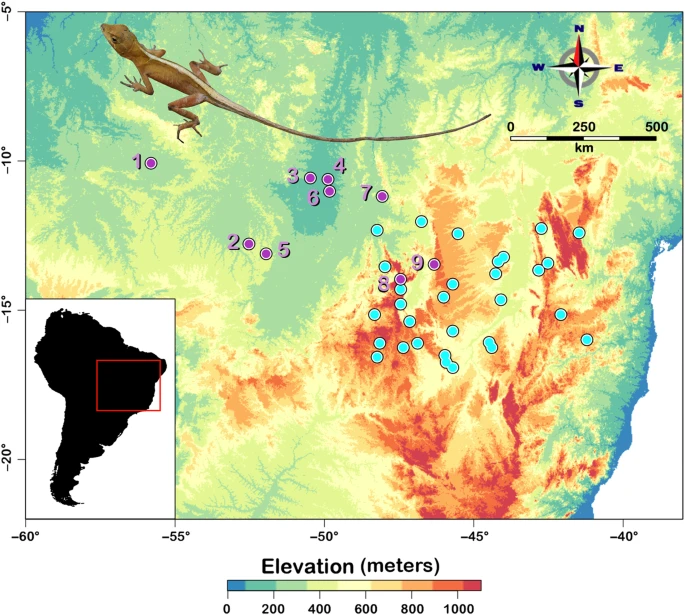
Genetic structure and landscape effects on gene flow in the Neotropical lizard Norops brasiliensis (Squamata: Dactyloidae)
Autores: Emanuel M. Fonseca, Nathaniel S. Pope, William E. Peterman, Fernanda P. Werneck, Guarino R. Colli & Bryan C. Carstens.
Data de publicação: 04 de Abril de 2024
Resumo: One key research goal of evolutionary biology is to understand the origin and maintenance of genetic variation. In the Cerrado, the South American savanna located primarily in the Central Brazilian Plateau, many hypotheses have been proposed to explain how landscape features (e.g., geographic distance, river barriers, topographic compartmentalization, and historical climatic fluctuations) have promoted genetic structure by mediating gene flow. Here, we asked whether these landscape features have influenced the genetic structure and differentiation in the lizard species Norops brasiliensis (Squamata: Dactyloidae). To achieve our goal, we used a genetic clustering analysis and estimate an effective migration surface to assess genetic structure in the focal species. Optimized isolation-by-resistance models and a simulation-based approach combined with machine learning (convolutional neural network; CNN) were then used to infer current and historical effects on population genetic structure through 12 unique landscape models. We recovered five geographically distributed populations that are separated by regions of lower-than-expected gene flow. The results of the CNN showed that geographic distance is the sole predictor of genetic variation in N. brasiliensis, and that slope, rivers, and historical climate had no discernible influence on gene flow. Our novel CNN approach was accurate (89.5%) in differentiating each landscape model. CNN and other machine learning approaches are still largely unexplored in landscape genetics studies, representing promising avenues for future research with increasingly accessible genomic datasets.
Visualizar Entrar em contato com pesquisador(a)
Comparative phylogeography shows congruent co-divergence in Neotropical seasonally dry forest and savanna tree species
Autores: Luciana Cristina Vitorino, Mateus Neri Oliveira Reis, Warita Alves Melo, Rosane G. Collevatti.
Data de publicação: 04 de Fevereiro de 2024
Resumo: The response of South American seasonally dry tropical forest (SDTF) and savanna species to the Quaternary climate changes is still poorly understood. Here we use a multi-model inference approach to compare the phylogeography and demographic history of five trumpet tree species (also known as pau-d’arco) and draw general biogeographical patterns: *Handroanthus impetiginosus*, *H. ochraceus*, *H. serratifolius*, *Tabebuia aurea* and *T. roseoalba*. The study was conducted across the Amazonia, Atlantic Forest, Cerrado and Caatinga ecoregions in South America and Brazil, focusing on taxa from the family Bignoniaceae, Tabebuia Alliance, trees. We compiled genetic data, occurrence records and ecological niche modelling (ENM) from published articles. We used coalescent modelling to test patterns of co-divergence and analysed niche breadth and overlap and spatial patterns in genetic diversity using quantile regressions. Species showed concordant lineage divergence times in the Pleistocene. Lineage diversification and phylogeographical patterns are more related to species niche breadth than to biome (savanna or SDTF). Differences in genetic diversity among species match the expectations for the demographic scenarios obtained with coalescent simulations and ENMs: species with wider range expansion during the Last Glacial Maximum had higher diversity than species with range retraction or multiple refugia. Diversification burst in the Pliocene, and major diversification of lineages during the Pleistocene seems to be a general pattern in SDTF and savannas in South America. The high number of haplotypes at Central Brazil, corresponding to the Cerrado ecoregion, highlights the importance of Protected Areas for SDTFs and savannas, highly threatened biomes in Brazil.
Visualizar Entrar em contato com pesquisador(a)Unprecedented habitat use by an arboreal Neotropical marsupial (Didelphimorphia: Didelphidae) in the Cerrado
Autores: Hernani F. M. Oliveira, Nícholas F. Camargo, Humberto C. Nappo, Isac M. Venâncio, Tânia A. Queiroz, Joseana L. Freitas, Diainara S. Figueiredo, Pedro R. Alencar, Ticiane L. Costa & Guarino R. Colli.
Data de publicação: 29 de Novembro de 2023
Resumo: The brown-eared woolly opossum (Caluromys lanatus) is an elusive frugivorous Neotropical canopy specialist marsupial considered primarily arboreal, but here we report the first records of individuals from this species captured on the ground in the Cerrado. We hypothesize two main reasons to explain this behavior: first related to canopy openness, which would force the animals to the ground to keep moving across the landscape; and the second related with search for food on the ground during periods of food scarcity due to increased canopy gaps. Our findings can have important implications for the species conservation and understanding forest ecological dynamics.
Visualizar Entrar em contato com pesquisador(a)